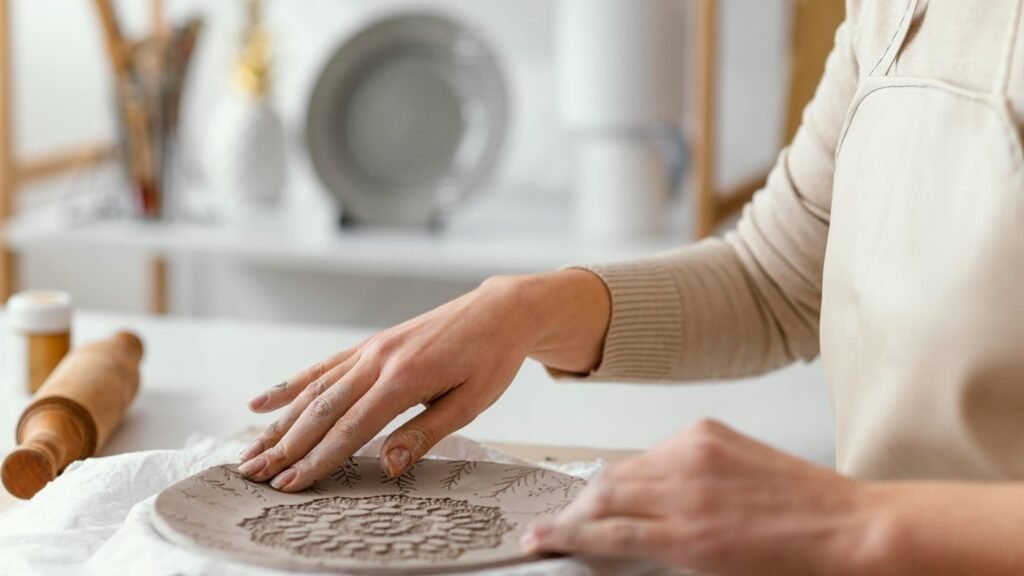
Topic 6: Tactile Exploration and Mental Representation of the Image
In ceramic art, tactile exploration is a crucial tool for blind and visually impaired individuals. Touch not only allows the perception of form, texture and temperature, but also fosters trust, creativity and emotional connection with the material. Through tactile engagement, participants can gradually discover shapes, gain confidence and express themselves authentically.
The emotional process of touch
Trust: contact with the material provides security in the creative process.
Surprise: shapes gradually emerge under the fingers, creating moments of discovery.
Freedom: the absence of visual aesthetic judgements allows authentic expression.
Intimacy: hands develop an exclusive relationship with the material.
Importance of touch in inclusive art
Touch becomes the primary language for understanding and expression. Participants develop a tactile vocabulary, or body memory, that replaces the visual image. This approach ensures:
Accessibility: art becomes accessible beyond visual barriers.
Therapy: working with materials relieves anxiety and enhances self-confidence.
Sensory translation: visual information is transformed into tactile experiences.